 Digital Scoop India Official Platform of Digital Scoop India Featuring Latest & Best News #Articles #Bytes #Entertainment #DigitalScoopMagazine
Related Articles

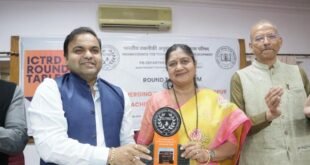

Gurugram, India — At a time when millions of patients suffering from chronic digestive symptoms continue to be told that “everything is normal” despite persistent illness, Dr. Zubin Dev Sharma is emerging as one of the key voices driving the evolution of Neuro-Gastroenterology and GI Motility as a serious, science-driven subspecialty in India.
A Senior Consultant in Luminal Gastroenterology & GI Motility at Fortis Memorial Research Institute, Gurugram, Dr. Sharma has spent the last decade building advanced physiology-based digestive care pathways focused on understanding the actual mechanisms behind chronic gastrointestinal disorders rather than merely suppressing symptoms.
His work centers around patients with refractory reflux disease, chronic constipation, bloating, swallowing disorders, gastroparesis, pelvic floor dysfunction, and disorders of gut–brain interaction — conditions that have historically remained poorly understood and frequently dismissed as “psychological” or “stress-related.”
According to Dr. Sharma, one of the biggest challenges in modern digestive healthcare is that many patients with genuine physiological gut dysfunction continue to suffer for years because conventional investigations often appear normal.
“A normal endoscopy does not necessarily mean a normal gut,” says Dr. Sharma. “Many patients with severe digestive symptoms have underlying abnormalities in motility, gut sensation, neuromuscular coordination, accommodation, or reflex pathways that require specialized physiological testing to diagnose.”
Over the years, Dr. Sharma has been instrumental in developing one of North India’s few dedicated centers focused on Neuro-Gastroenterology, GI Motility, and Pelvic Floor Disorders. His program integrates advanced diagnostics such as high-resolution esophageal manometry, anorectal physiology testing, EndoFLIP, transit studies, breath testing, impedance analysis, and biofeedback therapy into routine clinical practice.
One of the landmark initiatives under his leadership has been the development of the Fortis Advanced Constipation & Pelvic Floor Disorder Clinic, which today receives referrals from tertiary care centers across the country for complex and difficult-to-diagnose digestive disorders.
In another important step toward advancing motility sciences in India, Dr. Sharma has also been instrumental in conceptualizing and developing a dedicated high-resolution catheter for advanced gastric and small bowel motility assessment — the KARE Antroduodenal Manometry Catheter.
Named after his parents, the KARE catheter represents an indigenous effort toward expanding access to advanced antroduodenal motility testing in India. The platform is now being adopted across multiple centers nationwide and is helping bring sophisticated gastrointestinal motility diagnostics beyond a handful of elite institutions.
Recently, Dr. Sharma conducted live demonstration workshops and advanced training sessions on esophageal, anorectal, and antroduodenal manometry for gastroenterologists from across the country, reflecting the growing interest in motility sciences within Indian gastroenterology.
Beyond clinical innovation, he has also emerged as a strong academic advocate for Neuro-Gastroenterology in India. Through conferences, workshops, training programs, and academic discussions, he has consistently emphasized the importance of physiology-driven diagnosis and personalized digestive care.
His work also bridges the gap between GI physiology and advanced therapeutic endoscopy — combining motility science with minimally invasive interventions such as third-space endoscopy, advanced GERD procedures, and functional luminal therapies.
Colleagues in the field increasingly view this shift as part of a broader transformation within gastroenterology, where understanding the functional and neuromuscular behavior of the gut is becoming as important as structural imaging and conventional endoscopy.
As awareness around disorders of gut–brain interaction and digestive motility continues to grow globally, experts believe India is now witnessing the early development of a more specialized and scientifically rigorous Neuro-Gastroenterology ecosystem — an area where clinicians like Dr. Zubin Dev Sharma are playing a defining role.
With increasing adoption of advanced motility technologies, growing patient awareness, and a stronger push toward precision digestive medicine, the field is gradually helping move patients away from years of uncertainty, repeated consultations, and symptom dismissal toward objective diagnosis and targeted therapy.
About Dr. Zubin Dev Sharma
Dr. Zubin Dev Sharma is a Senior Consultant in Luminal Gastroenterology & GI Motility and Clinical In-Charge of Neuro-Gastroenterology & the Fortis Advanced Constipation & Pelvic Floor Disorder Clinic at Fortis Memorial Research Institute, Gurugram.
An All India Gold Medalist in Gastroenterology, he is recognized for his work in Neuro-Gastroenterology, advanced GI Motility diagnostics, therapeutic endoscopy, third-space endoscopy, and physiology-based digestive care. He has contributed extensively through clinical innovation, academic training programs, workshops, and research initiatives aimed at advancing motility sciences and precision gastroenterology in India.